Monday, October 3, 2022

Title: CIS Community Building and Dignified Housing (Testimonies).

 CIS, Los Olivos CIS, together with Homes from the Heart, the Salvadoran Ministry of Housing,

the Franciscan Sisters of Perpetual Adoration, and many CIS partners and individuals

completed 17 dignified homes in 2022. This makes a total of 100 home built in Paso Puente to

date. CIS has an integral approach that includes Scholarships, Leadership Development, Art

and Mental Health programs so that families can not just have a roof over their head, but the

tools for overcoming poverty and contribute to building their community and country free of

violence. CIS added 21 scholarship recipients in Paso Puente in 2022 thanks to St. Elizabeth

and Holy Spirit Parishes in Kansas City, making a total of 69 scholarship recipients there this

year – an integral  to overcoming violence and migration.

Here are some testimonies from the families who are part of the project:


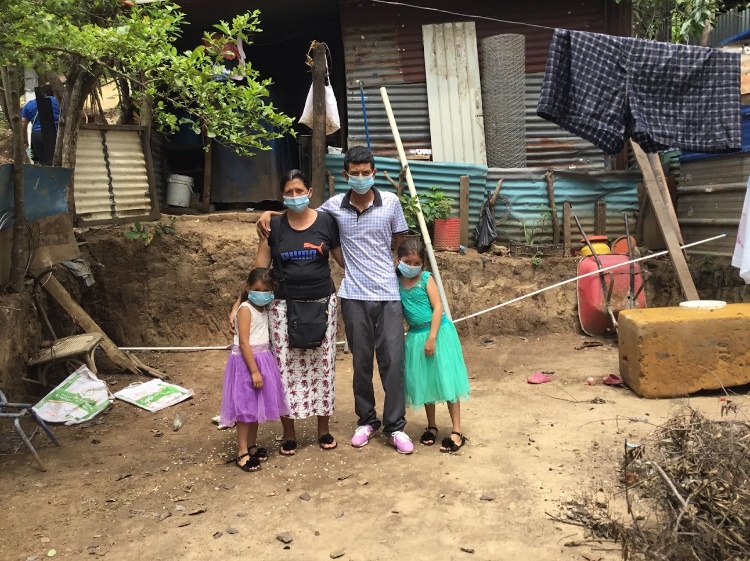
              Testimony of Sara Elizabeth:


Sara Elizabeth is a single mother of two young daughters and an older son who lives with his wife and Sara’s granddaughter in their new home. The home has a corridor, 2 bedrooms, and a living room. Sara has a business making pupusas (a Salvadoran tortilla filled with beans and cheese or other ingredients) from 5 – 9 a.m. in the morning for breakfast and 5 – 9 p.m. for dinner. Her ex-husband left her for another woman and lives on the same lot which is in both Sara and her ex-husband’s name. He signed the papers so Sara could be the beneficiary of the home, which took a long time to convince him and why she had to wait over two years since the project started. He does not help her with any economic support to raise their children. He gives his daughters a quarter occasionally, but doesn’t help with food, clothing, or studies. Sara has a 5th grade education. Because of the poverty she grew up in, she could not continue her studies.

Sara: "The difference now is we don’t live a deteriorated shack where rain would come through the roof. We would have to move the furniture and everything when it started raining to avoid the leaks. Now we have a dignified roof over our heads. My daughters can sit down and play on a clean floor, not on a dirt floor. They couldn’t play before. We are very happy. We would never have dreamed of owning our own home. We have lived in a shack for years. My business selling pupusas for breakfast and dinner barely puts food on the table. I can buy my daughters new clothes once a year. My daughters are getting a quality education thanks to CIS scholarship program. If I had to pay for their studies that would be an additional sacrifice. I see a brighter future for my daughters thanks to all blessings we have been given. I also helped with the construction and walk my daughters to school. I believe it is important for the families to contribute to this development; not just wait for a handout. I am on the Board of  Directors of the community to organize for other necessities like to get running water into our homes. I want to give thanks to the CIS, the Franciscan Sisters of Perpetual Adoration, Homes from the Heart, the Salvadoran Ministry of Housing, and the organizations and individuals that support their work and share your blessings and not just put money in your own pockets. We feel it is a blessing that God put you in our path, that you reached out to visit us and see our reality. Imagine, we have been living in this community since the earthquakes of 2001, and no one ever visited us or help us overcome. We are happy you can see the fruit of your efforts. May God bless you, so you continue his good works." 


Testimony of Blanca Luz.


Blanca Luz is the mother of five children. She lives with her youngest son, Miguel. Three of her

children are older and live with their families. Her second youngest son is in prison after being

seduced into joining the gang. Miguel has severe physical disabilities due to having been beat

up by the gang for not joining. This makes it difficult for him to get a stable employment.

Blanca Luz has only a first-grade education and is originally from the countryside where there

was not much education available for her to study. Her first ex-husband abandoned her and her

first three children giving her no economic or moral support. Her Second ex-husband is

mentally ill and cannot help her with expenses. She has been the mother and father raising her

five children She sold tomatoes, corn, herbs, lemons, empanadas, and fruits to raise her

children. She was also the maid of a family in a wealthy home when her mother was alive to

take care of her children. [maids in El Salvador typically live with the wealthy family and only

get two days off a month]. Miguel does odd jobs such as painting, cleaning, and collecting soda

cans to sell for recycling.

Blanca Luz:

"I feel happy. I feel proud. I never had a little home. Now I can sleep well. We are happy

to be in a secure house that is not going to fall down with the wind, or the roof and poles

will not rot. Before, during the cold months of December, we would be shivering. Now

we are nice and warm. We don’t have to sleep on the dirt floor with little insects all over

us, and animals running in and out of the house. I have always maintained my house

clean even when we lived in a shack with a dirt floor. People always envied me and

thought I was rich because I had a neat and clean home. Just because you are poor,

doesn’t mean you can’t live in a dignified manner. I want to contribute to my community

and my home. Miguel and I bought paint and the things we need with our hard work.

Some people have big plasma televisions. We can’t afford that. But with our hard work

and saving little by little we could by a stove and small refrigerator. God has blessed us

and helps me with my son’s health; and we do our part."


Monday, July 25, 2022


Volunteer Point of View on  The Environment and Water Program

Three days after landing at the airport, I found myself in a truck driving through the beautiful mountains of El Salvador, sat next to Don Luis (my new program director) trying my hardest to communicate in broken Spanish about El Programa de Agua Limpia y Medio Ambiente. We were on our way to my first job in Apastepeque, apparently where they take all the volunteers on their first day for an easy introduction.

  Inside a water purifier in Soyapango.

This is where I got to grips with the program. We visited a small school in Apastepeque  with a water purifier in an outhouse in the courtyard. After opening it up, you can see its three components, a cartridge to remove physical dirt, a UV filter to kill any remaining bacteria or pathogens, and a digital calendar counting down the days for its next checkup. It connects to the pipes and flows out clean through the taps of the school. This is a water purifier – an incredible 40 communities have received a water purifier from CIS.

Throughout my 10 weeks here, we spent lots of days traveling around the country in the truck checking the purifiers were in good condition, and Don Luis trained me on what to look for and how to fix them. I got to know a lot of different communities this way, meeting wonderful people in every town. Don Luis, knowing my inner tourist would appreciate it, would often take us to lunch in some of the most beautiful towns on the way home, my favorite being Suchitoto.

                                                            Household water filters. 

As well as the water purifiers, we also provide water filters; a system of two buckets that filters water for households in rural communities. Given the scale needed to reach as many households as possible, Don Luis works with teams of students at different communities across El Salvador. The students hold regular workshops in the community demonstrating how to use the water filters and explaining why they are important for health and sanitation, a vital educational element to the program. I was lucky enough to attend a few of these workshops and get to know the students in San Pedro Perulapán and San Rafael Cedros. It was so motivating seeing young people taking on leadership roles and taking action for clean water in their hometowns.           

One of the things that continues to blow me away about El Salvador is just how kind the people are. I was fortunate enough to visit a town called Tonacatepeche to check their water purifier. In the town, they make the indigo paint known as añil, commonly used for artisanal clothing that you will see everywhere in the country. After we had finished, they were generous enough to show me around the farm where they grew the plant that produces the añil pigment, and the skilled process of oxidization that turns the leaves blue over time. Later it is dried out and ground down by hand to produce the fine indigo powder.                        

                                                          Añil process in Tonacatepeque

Overall, I have had an incredible experience working on the water program with CIS. I have learnt so much about the water issues facing the country, the causes of pollution, and most importantly some of the solutions adopted by local communities. I couldn’t recommend a more valuable way of seeing all corners of El Salvador and getting to know the amazing Salvadoran people.

By Zara Holden.


Friday, October 1, 2021

Housing CIS University students apartment


San Salvador, 20 de agosto de 2021

Dear Friends,

We are grateful to many of you who support CIS scholarship and leadership development program through your church, community organization, foundation, academic institution, or directly to CIS.  It is truly a miracle that students who are the first in their family and are from communities where no one had ever gone to university are graduating and making up the 4.6% of students in El Salvador who earn a university degree.   It is truly transforming lives, families, and communities.   I am asking you to give a special one-time contribution to expand our student housing program so that those most in need can graduate from university and bring their families out of poverty and become empowered leaders to work for change.  

Many students cannot travel back and forth to their community to university each day because of distance, expense, and security.  We do not have sufficient space for the demand for students who need housing closer to the university.  As plans for opening the universities to classroom learning, many new students have requested to enter already overflowing small apartments.  The overcrowding was lessened by the pandemic as some students were able to go home and study with CIS provided computers and internet.  Still, some stayed in CIS dormitories due to extremely inadequate internet connections in their village. We want to prepare for the 2022 cycle to have space for students to live and study.    For this reason, we are asking you for a one-time investment for the CIS to acquire an additional apartment for university scholarship students.

Our goal is to raise $ 80,000 to purchase and apartment that could house 10 University Scholarship Students.  This is to purchase a spacious apartment in a secure area by the end of the year. 

·         If 10 people committed to sponsor student housing for their 6 years at university, we would raise $6,000 x 10 = $60,000

·         If 20 people committed $1,000 or the equivalent of one year of a room rental, we would have the remaining $20,000 needed.  


Consider the impact in making your decision to donate to this important investment:

·         One student pays and average of $1,000 to rent a room in the vicinity of the university for one year.

·         $6,000 would be the expense for one student to rent a room for the 6 years of his/her university career.  

·         Currently, renting an apartment where 8 students could live in the area would cost between $5,000 - $7,200 per year which brings the cost down from renting an individual room.  Still investing in real estate provides long-term stability. 

·         Students pay for the water, electricity, and internet.  They also pool funds for meals.  They would spend more a bus fare if they had to travel each day, and so have more funds available for their studies.  It also means CIS does not have added expenses after the purchase of real estate and students learn economic responsibility.

·         The student apartments are a new learning experience for students.   Students learn to live in community with shared space, rules, and respect.   Many Salvadoran males learn to cook and clean for the first time.

·         CIS goal is to raise funds between now and the end of the year to have a space decided on for January 2022 semester.  

·         The most economically marginalized students cannot afford to study with the CIS scholarships without support for housing as well. 

CIS currently subsidizes student housing in different manners:   we own two apartments in San Salvador purchased in 2017 and 2018.  Sister relations pay for rental in San Salvador, San Miguel, and San Rafael Cedros.   Cinquera students receive a larger monthly scholarship to pay for an apartment in San Salvador.  Other students stay with relatives or travel back and forth each day.   Sixty-four of over 200 CIS university scholarship students rely on subsidized housing in addition to scholarships to be able to study.  Students from the following communities have benefitted: San Pedro Perulapan, Suchitoto, San José Palo Grande Isla Tasajera, Isla El Espíritu Santo, Estanzuelas, Llano Largo, Ita Maura, San Pablo Tacachico, Comasagua, Tamanique, Distrito Italia, Comunidad Ellacuria, Cinquera, and San Rafael Cedros.


Students studying in their home villages were under much hardship during the pandemic.


Please consider a generous contribution to CIS general Scholarship Fund with a donation earmarked for student housing.   I am asking you to consider donation between $6,000 and $1,000 which would cover the equivalent of housing for a student throughout their university career or for one year.   Your contribution will multiply because it will provide housing even after a student graduates to a new student if we purchase instead of rent an apartment.   Of course, no donation is too big or too small.   Below is the information or please contact me if you need more information. 

In Solidarity,

Leslie Schuld, CIS Director, LOS OLIVOS CIS Legal Representative in El Salvador

How to donate: Tax deductible donations can be made payable to and mailed to:

Los Olivos CIS (in U.S. dollars) / PO Box 76 / Westmont, IL 60559-0076, USA.


Debit/credit card donations can be made online:

https://www.cis-elsalvador.org/donate

PLEASE NOTE YOUTH SCHOLARSHIP AND LEADERSHIP DEVELOPMENT FUND FOR ONLINE DONATIONS WITH A NOTE – STUDENT HOUSING OR EARMARK YOUR CHECK.

For more information: 

Toll free number in U.S.:  1-866-887-2665: El Salvador:  ++ 503-2226-5362

www.cis-elsalvador.org; info@cis-elsalvador.org


Building Community – Building Dignified Homes: CIS’s integral approach to work in solidarity is changing people’s lives and changing their community


San Salvador, June 2021


Dear Friends,


We hope you and your communities are healthy and coming out of the pandemic with strengthened solidarity and awareness of our inter-connectedness via health, the environment, technology, and community.   El Salvador, too, is slowly coming out of the pandemic with a mass vaccine program.  I am writing to ask for your support to continue building community and dignified homes and addressing the root causes of migration and gang violence.

Maribel is the sole breadwinner, sustaining her three children and grandchild.  She makes less than minimum wage, at a bakery, and would never have the means to build a dignified home. (Before and After)

El Salvador is going through a major shake-up, as results from the February elections gave the New Ideas Party a qualified majority (2/3) and, including their allies, an absolute majority (3/4) of the deputies in the Legislative Assembly.  The traditional political parties took a major hit with ARENA winning only 14 and the FMLN only four of 84 legislative deputies.  The population voiced a clear message for change. Some of the abrupt changes made since the new assembly was sworn in on May 1st have caused discontent internationally, as well as within traditional power sectors and human rights groups in El Salvador. Nevertheless, according to polls, these changes are supported by the majority of the Salvadoran population. 


Independently of who holds political power nationally or locally, the CIS has always accompanied communities to ask local and national authorities for support. We re-affirm our mission of solidarity, transformation, and accompanying the most economically and socially excluded communities so that they can have the tools to build an El Salvador they believe in. These include the tools of education, clean water, respect for the environment, dignified housing, women’s businesses, democratic elections, and opportunities to be empowered actors in the construction of justice and dignity.

 CIS has addressed the root causes of migration since we were founded, first by creating markets for Salvadoran artisans who believed their only opportunity to build a dignified home was to go to the United States to work for a few years.  They persistently asked CIS for help getting a visa.   Once we started selling their products, they never asked again.  Then massive waves of migration began after Hurricane Mitch in 1998 and the 2001 earthquakes.  CIS was primarily focused on accompanying human rights struggles (denouncing assassination, forgiveness of the land debt, and non-privatization of public services), but the leaders of these struggles were leaving the country. So we consulted with the communities we worked with, explaining that we can accompany human rights struggles but CIS cannot be the motive force.   We explained that it is difficult to organize if all the leaders are migrating. The community members told us they did not want to migrate, but they could not afford to put beans and rice on the table. With that feedback, the CIS began to focus on social and economic rights – developing programs of scholarships, women’s enterprises, clean water, and most recently dignified homes.  Social programs and economic empowerment give Salvadorans the tools to be able to stay in their country and be active in community development and human rights. 


Community Building – Home Building – CIS as a solidarity organization

Romero Community Experience

CIS is not a home-building NGO.   We are a solidarity organization.   Our priority is to build communities most in need who are willing to organize and be actors in their transformation.  Building homes grew out of accompanying the Romero Community in their 10-year struggle to get title to the land.   They built their community without land security despite 10 years of getting the run-around and false promises.  The CIS accompanied this community-building effort first with a few scholarships.  Our CIS scholarship program traditionally covered only high school and university scholarships, but we realized that youth join gangs before high school if they do not have any other alternative.  St. Elizabeth got involved as a sister parish and took the initiative to raise enough funds to provide scholarships starting at pre-school.  As we got to know the community, we realized most of the mothers were heads of household and many could not read or write. CIS organized literacy courses and 15 women graduated from 6th grade.   We worked with women to cultivate organic indigo and vegetables to generate income and food sovereignty.  In 2015, when they finally got the title to their land, we immediately began fundraising and getting permits to build 65 dignified homes, potable water, and a septic system in each home. CIS was able to complete the project with the support of generous donors, foundations, and a few miracles conceded from San Romero in 2017. The youth are not migrating or joining the gangs as new opportunities emerge and a new self-image of dignity is developed.  


            Clean Water                   Participation                Education             Art & Mental Health


Paso Puente Community –   A dignified home is a human right!

Before                           After

Then our solidarity partners began to ask us about the community Paso Puente across the street, a community of 153 families with similar deplorable conditions – no potable water; no sewage; houses made from plastic, tin, and bedsprings; single mothers who could not read or write; kids on the street instead of in school; and additionally, a community filled with gang members due to complete social exclusion.  The community was not organized and did not trust one another – much less CIS.   We also knew we did not have the ability to do this on our own, since the community is three times the size of Romero Community, and we did not have international relationships established there, like we did in Romero over the course of a decade.


CIS requires that communities be actively engaged in their transformation to build a partnership.   Because of their dire conditions, Paso Puente did not meet those criteria.  So, we decided to start with scholarships to build leadership, trust, and organization in 2017.  We accompanied them to form a community council and ask for potable water from the government, but like Romero Community, they were repeatedly denied. We organized art and mental health gatherings to build trust in the community and to get the youth to dream a different future.  The youth expressed to us that they saw their only options as migrating or joining the gang.  Just because of their address, they were denied dignified employment.  When a new government came to power in 2019, and CIS accompanied them again to ask for potable water, the new government immediately responded and visited.  Seeing the conditions, they agreed to work in partnership with CIS and Paso Puente – not only to provide water, but dignified housing, sewage, and streets. In October 2019 we began to build homes with support from the Salvadoran Government for the first time.

Sara, a single mother, and her 3 children need your support!

Since then, in Paso Puente, CIS has completed 85 dignified homes, provided 48 scholarships, organized literacy classes for the mothers, organized art and mental health workshops with over 200 participants, and gotten several kids in school who were roaming the streets or who had slight disabilities and were not previously welcome in the schools. 

 Still, this is just the beginning – We need your support to continue to accompany this community transformation!


·         CIS needs to raise $100,000 for the next 40 dignified homes!  Each house is about $8,000 (they have gone up $500 due to cost of materials). The Salvadoran Government is putting in $3,500 per home, plus water and sewage. Homes from the Heart has agreed to put in $2,000 per home. (Thank you!)  So the CIS needs to raise $2,500 per home!  You can provide a dignified home to a family for just $2,500! No donation is too big or too small: $1500 will build a complete bathroom; $600 will tile the floor; $400 will pay for electrical installation; and $50 will provide doors for the home.


·         With each home we build, we meet new children who are not in school for various reasons – the majority are economic; also disabilities; parents who cannot read or write often do not see the reason to send their kids to school; or the youth need to work.   When we started with a few scholarships in 2017, no one had been to high school.  Currently there are 48 students on scholarship:   one is in university, 6 are in high school, and 41 are in kinder–9th grade, thanks to Holy Spirit Parish in Kansas City!!!   Still, with the number of students who want to study, we cannot cover the demand.  We need an additional sister relationship and/or individual donations:  $1,000 a year will provide a university scholarship (two will graduate from high school this year and aspire to go on to university), and we have 20 new students applying for pre-school to high school scholarships at $300 year.  If we raise $8,000 total, it will cover the need for new Paso Puente scholarships in 2022.   Education is the most powerful tool for the families to maintain their homes and to get out of extreme poverty.


Please consider donating to solidarity and transformation:

·         $2,500 builds a dignified home (combined with government and Homes from the Heart donations),

·         $1,500 builds a complete bathroom,

·         $1,000 for an annual university scholarship or $300 for an annual high school scholarship, and

·         $50 buys doors for a home or a 2-month high school scholarship.

Thank you for being part of this social transformation and addressing the root causes of immigration to give people the opportunity to stay in their own country!


In Solidarity,

Leslie Schuld, CIS Director, LOS OLIVOS CIS Legal Representative in El Salvador


How to donate: Tax deductible donations can be made payable to and mailed to:

Los Olivos CIS (in U.S. dollars) / PO Box 76 / Westmont, IL 60559-0076, USA.


Debit/credit card donations can be made online:

https://www.cis-elsalvador.org/donate

PLEASE NOTE DIGNIFIED HOUSING, SCHOLARSHIPS FOR PASO PUENTE ON YOUR CHECK OR ON-LINE DONATION, OTHER DESIGNATION, OR WHERE MOST NEEDED.

For more information: 

Toll free number in U.S.:  1-866-887-2665: El Salvador:  ++ 503-2226-5362

www.cis-elsalvador.org; info@cis-elsalvador.org


Tuesday, September 8, 2020

CIS CLEAN WATER AND ENVIRONMENT PROGRAM – SUPPORTING ORGANIC VEGETABLE PROJECT WITH THE COMMUNITY OF VALLE NUEVO IN TONACATEPEQUE

Today I visited the small community of Caserío Valle Nuevo, and I couldn’t help but be reminded of how resilient people can be. Driving the through Distrito Italia for the first time in almost six months with Don Luis and Yeny, I was struck by how normal everything seemed. Everyone was wearing masks, but the streets were as full as I could ever remember them. Ostensibly, the trip was to deliver some farming tools to a community agricultural cooperative in Valle Nuevo, but we stopped first for a brief meeting at the small clinic in Distrito Italia with some of the leaders from Romero Community. I was reminded of how close some of these communities are. Community organizers in Romero, for example, must necessarily know and work with any of the local health professionals. There is often little distinction between a business meeting and a social call here. 


We loaded up the tools at Romero Community—a few wheelbarrows and various rakes, shovels and other tools—and from there it’s only about a five-minute drive to Valle Nuevo. Quite a few community members were there to greet us, and it didn’t take long to unload, but by this point I had figured out that today wasn’t really about the tools. The people here wanted to show of what they’d built. Over the past two months, community members had taken a plot of unused and overgrown land and turned it into a huge garden with corn, squash, tomatoes, and other crops. And they’d done it by hand without so much as the proper tools for the job.


I met a woman named Carolina who owned the land in question. She told me how she was born here, in the community, and went away to study before returning a few months ago. She told me about her passion for sharing the things she has and the things she has learned with her community. The project she conceived of as a women’s cooperative when she arrived grew into a community-run agricultural project that will help the community be self-sustaining. She rents the land to the cooperative for $5. 


The community members led us down a side path to the huge garden. Esteban, one of the community leaders, talked proudly about how healthy and natural their produce was, singing the praises of the agricultural engineer that helped them design their methods. Carolina led me to the old well that will be crucial to the project’s future. The dry season is coming soon, and when it does, they will need irrigation. The well has gone unused for decades and the pump is broken, so the plan is to uncover it and draw water by hand until they can afford to buy a new pump. Here, Carolina told me about her vision for the future of the project, expanding to use the rest of her land, opening a bakery, and even teaching people craft skills that they can commercialize. The goal is to empower people in the community, particularly the women, and give them freedom and control over their lives.

It was good to be out of the city after so long. The women brought sweet bread and lemonade, and my tongue found itself remembering the rhythm of conversation and laughter in these rural communities that I’d forgotten after so many months in isolation. They sent us home with squash straight from the vine, a whole bag of freshly cooked corn on the cob, and the thought that maybe the world isn’t ending after all. We live in difficult times, but people keep moving forward despite everything.

BLOG BY CIS BVS INTERN CAMERON CLARK

Tuesday, August 11, 2020

PASO PUENTE-BUILDING HOMES-BUILDING COMMUNITY


CIS mission is to build relationships based on solidarity - mutual respect and mutual support. Our principle programs contribute to building communities and empowering women, youth, and those most marginalized to overcome poverty and to become advocates for social and economic justice, respect for the environment, and gender equality.

Our principal programs are youth scholarships and leadership development, women’s empowerment and micro enterprises, clean water and the environment, language and cultural exchange, delegations, and international election observation. We are also contributing to building dignified homes with partnerships with the local community and international partners. 

Paso Puente Community in the municipality of Tonacatepeque is made up of 150 families who were displaced by the 2001 earthquakes. They squatted on government land designated for economically marginalized families. They were granted title to their land in 2014. Still they lived in squalor conditions. CIS began to work with the community with the scholarship program and developing their community council. Still there was a lot of distrust toward anyone who came from outside. Only later did I learn that they had been swindled 3 or 4 times by people allegedly representing a foundation and asking for $50 - $100 each time from each family to develop a home building project. 

CIS was able to build off the experience of building 65 homes in Romero Community in 2016 after a decade long struggle to gain title to their land, and at the request of Romero Community and Paso Puente began to develop CIS programs in Paso Puente. In 2019, Holy Spirit Church in Kansas City became a partner with CIS and together with St. Elizabeth’s Parish are supporting scholarships and leadership development in the community. 

In 2019, CIS received a grant from the INTI RAYMI FOUNDATION for community support, but said we had to make sure everyone benefited equally. The leader of Romero Community, Raul Acevedo, asked CIS to invest it in Paso Puente. It was going to be a challenge with 150 families in need. We asked Raul to identify the 15 most marginalized families to start from there to contribute to dignified housing, and we would see how it developed from there. 

Then when a new government was sworn in on June 1st , 2019, we asked them to help CIS as we had the previous governments to support a transformation in the area and specifically to get potable water and homes for Paso Puente, and sewage and roads for the neighboring communities. To our surprise, they agreed immediately and visited the community on July 3rd, 2019 and have followed through on their commitment. Together CIS with the Salvadoran Ministry of Housing and FONAVIPO, Paso Puente Community, Homes from the Heart and international partners began to build and have now completed an additional 50 dignified homes.


Now, August 2020, there are 50 additional families in the community applying for support from FONAVIPO and CIS. The Salvadoran Government and the Ministry of Housing are committed to building dignified homes where they are most needed and have assured us that they want to continue the coalition with CIS and the communities. Homes from the Heart is one of CIS strategic partners raising funds for dignified homes.

This is part of an integral effort to transform the reality of an area stigmatized by violence, where youth have been accused of being gang members because of where they live, beaten up by authorities, and dismissed for consideration for a job application when they list their address; an area where the majority of the women could not read or write; an area where families lived in deplorable conditions, without basic services, and in shacks that cannot protect them from rain, pandemic, or crime. The CIS has worked with the women to get literacy classes. We now have over 50 scholarship students in Paso Puente and over 125 including the surrounding neighborhoods. We also include leadership and art and mental health workshops as many of the youth have been victims or witnesses to violence.

Now 65 more families have a safe place to guard quarantine and to be sheltered from the rain (130 total including Romero Community). We need your support to benefit an additional 50 families. The CIS contributes $4,000 per home. The Salvadoran Government is contributing $3,500 per home plus potable water, sewage and roads, invaluable infrastructure projects to complement the dignified homes. No donation is too big or too small.
  • $4,000 will complete a full home
  • $1,500 will build a bathroom with accessories
  • $1,200 will build a roof
  • $620 will pay for a tile floor
  • $580 will pay for electric installation and the pila where Salvadoran wash clothes.
  • $100 will pay for over site of the construction of each home.

This family is one of the new applicants for dignified homes in the Paso Puente Community.

This family is one of the new applicants for dignified homes in the Paso Puente Community.

We have lived for 18 years with many difficulties. A dignified home will mean better life and better studies. I have to study in deplorable conditions. My notebooks and important materials and books have been ruined and gotten wet in our shacks. We get sick from the humidity. The whole community has to share one water faucet, and it takes all day to fill a barrel of water. We sleep in fear because of the insecure nature of our shelter. We are marginalized by outsiders, who say only delinquents and thieves live in shanty towns. This project will improve our lives at all levels. We cannot afford to build our own homes, so this project is an enormous blessing.

-Community member July 2019.


We would like to thank all of you who have contributed to this project through Los Olivos CIS, Homes from the Heart, FONAVIPO, the Inti Raymi Foundation, Rainbow of Hope for Children, The Franciscan Sisters of Perpetual Adoration, St. Rose Convent, The Pierce Foundation, The School Sisters of Notre Dame Atlantic and Midwest Province, Bob Chaney and family, community members and many other individuals and foundations who have contributed. 

We want to clarify that CIS is not a home building NGO. The community builds the homes and we support the process of building community. This effort is solidarity and part of a process of building and empowering communities who are willing to organize and be partners in the process. 

Written by Leslie Schuld, the CIS Director